
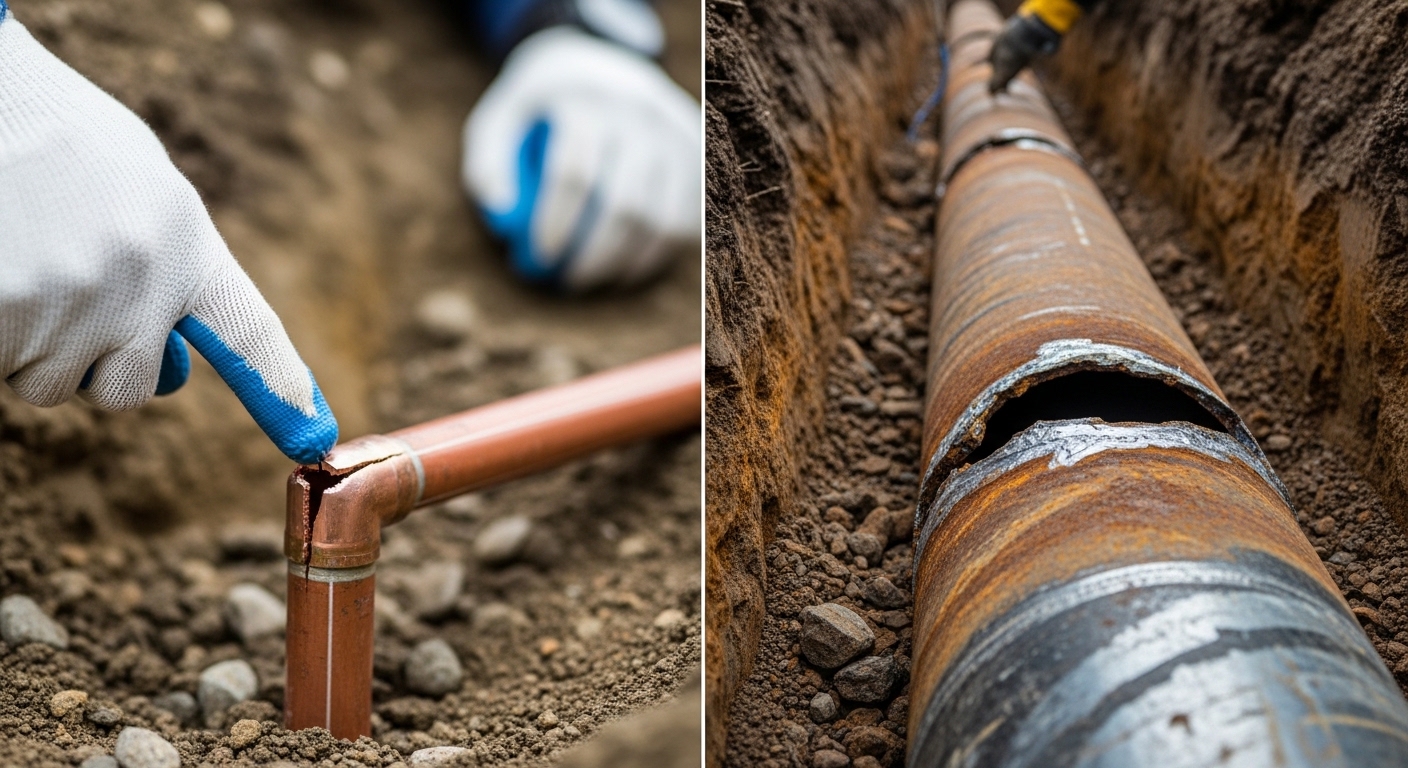
A sudden drop in water pressure, a mysterious puddle in the yard, or an unexpected spike on the water bill often points to the same culprit: a failing underground water main. For any property owner in New York, this discovery leads to an immediate question can the line be fixed, or does it need to come out of the ground entirely? Understanding the difference between water main repair and full replacement is the first step toward making a confident, cost-effective decision.
What Is a Water Main and Why Does It Fail?
The water main is the primary underground pipe that carries fresh water from the city connection into a home or commercial building. Over time, these pipes face constant pressure from soil shifts, temperature changes, heavy traffic above ground, and the natural aging of materials. Many properties in older cities still rely on pipes made from lead, galvanized steel, or early cast iron materials that were never designed to last for decades. When these pipes crack, corrode, or collapse, the property owner must choose between water main repair and a complete main water line replacement.
Signs You Need Professional Attention
Before deciding between repair and replacement, it is essential to recognize the warning signs of a failing water main. Common symptoms include:
- Low water pressure throughout the entire property
- Rusty, brown, or discolored water from multiple fixtures
- Wet spots, pooling water, or lush grass patches in the yard
- Unexplained increases in monthly water bills
- The sound of running water when all fixtures are off
- Cracks in the foundation or sidewalk near the water service line
If any of these signs appear, a professional inspection is necessary. Ignoring them often turns a small leak into a full system failure, leading to higher water main repair costs or the urgent need for a main water line replacement.
When Water Main Repair Is the Right Choice
Water main repair is typically the preferred option when the damage is isolated and the remaining pipe is in good condition. Common scenarios where repair works well include:
- A single, small crack or pinhole leak
- Damage caused by a specific event, such as nearby construction
- A leaking joint or fitting
- Pipes made from durable materials like copper with no widespread corrosion
In these cases, a skilled technician can expose the damaged section, remove the faulty piece, and install a new section of pipe. Trenchless techniques, such as pipe lining or spot repair, allow for water main repair with minimal digging. This approach preserves landscaping, driveways, and sidewalks while restoring water service quickly. The cost is lower than replacement, and the project is often completed within a single day.
However, water main repair is a targeted solution. It addresses only the visible or detected problem. If the surrounding pipe is old, brittle, or showing early signs of failure elsewhere, a repair may simply postpone a larger issue.
When Main Water Line Replacement Is the Better Investment
Full main water line replacement becomes necessary when the pipe has widespread damage, has reached the end of its lifespan, or is made from unsafe or obsolete materials. Specific conditions that call for replacement include:
- Multiple leaks along the same pipe
- Severe corrosion or thinning of pipe walls
- Pipe material is lead, galvanized steel, or polybutylene
- Recurring problems despite previous repairs
- The pipe has collapsed or shifted out of alignment
- A DEP notice or violation related to the water service line
While main water line replacement requires a higher upfront investment, it eliminates ongoing repair costs, improves water pressure, and ensures clean, safe drinking water. Modern replacement pipes are typically K-copper or high-density polyethylene, materials designed to last 50 years or more under New York conditions. Replacement also allows for upsizing the pipe to meet current household or business demand, something a simple repair cannot achieve.
For many property owners, the decision comes down to long-term value. Paying for multiple water main repair visits over several years often exceeds the cost of a single main water line replacement. Additionally, older pipes made from lead pose a health risk, and replacing them is the only permanent solution.
Comparing Costs: Repair vs. Replacement
Cost is a major factor in any decision. Water main repair generally costs less upfront because the work is limited to a small section of pipe. The price depends on the depth of the pipe, accessibility, and whether excavation or trenchless methods are used.
Main water line replacement costs more initially due to the length of pipe involved, full excavation or trenchless pull-in-place methods, and restoration of sidewalks or driveways if required. However, replacement provides a completely new system with a warranty on materials and workmanship. When calculating true cost, property owners should consider not just the immediate bill but the expected lifespan of the solution. A repair might last five years; a new line can last fifty.
How Professionals Make the Determination
Licensed contractors use a combination of inspection techniques to recommend repair or replacement. Video camera inspection is the most common tool. A small camera travels through the water line, transmitting real-time video of the pipe interior. The technician looks for cracks, corrosion, root intrusion, bellied pipes, and scale buildup.
Leak detection equipment pinpoints the exact location of underground leaks without unnecessary digging. Pressure testing measures the integrity of the entire line. Based on these findings, the contractor provides a recommendation. If the pipe shows isolated damage but is otherwise sound, water main repair is appropriate. If the pipe is deteriorating throughout, main water line replacement is the honest, long-term answer.
Trenchless Options for Both Repair and Replacement
Property owners often worry about excavation damaging their yards or driveways. Modern trenchless technology offers solutions for both water main repair and main water line replacement. For repair, cured-in-place pipe (CIPP) inserts an epoxy-saturated liner into the damaged section, creating a new pipe within the old one. For replacement, pipe bursting pulls a new pipe through the old one, fracturing the existing pipe outward. Both methods require only small access holes at the beginning and end of the line. Trenchless work is faster, cleaner, and often less expensive than full excavation, making it an attractive option when soil conditions and pipe materials allow.
Making the Final Decision
The choice between water main repair and main water line replacement comes down to the condition of the existing pipe, the property owner’s budget, and long-term goals. A single, recent leak in an otherwise modern copper line is a clear candidate for repair. An aging lead service line with low pressure and rusty water is a candidate for replacement. Homeowners planning to sell within a few years may prefer a repair, while those intending to stay for decades benefit from replacement.
Before any work begins, a reputable contractor should provide a written estimate and explain the reasoning behind their recommendation. Property owners should ask to see the video inspection footage and request a clear comparison of repair versus replacement costs, including expected lifespans. For those in New York, working with a DEP-approved contractor ensures the work meets local codes. Empire Water Main & Sewer Inc is one example of a licensed firm that provides both repair and replacement services across the five boroughs, using modern diagnostics to help property owners make informed choices.
Conclusion
Understanding the difference between water main repair and main water line replacement prevents unnecessary spending and future emergencies. Repair solves isolated problems quickly and affordably. Replacement resolves systemic issues and provides decades of reliable service. The right choice depends on evidence from a professional inspection, not guesswork. Property owners who invest time in understanding their pipe’s condition gain control over the decision and avoid the stress of an unexpected system failure.
Frequently Asked Questions
1. Can a water main leak repair itself over time?
No. Water main leaks do not heal or seal themselves. Soil movement, water pressure, and temperature changes actually make leaks worse over time. A small leak today can become a complete pipe failure within weeks or months.
2. How does soil composition in New York affect water main repair decisions?
New York’s soil varies from sandy loam to heavy clay and landfill materials. Clay soils expand and contract with moisture, putting stress on pipes. Landfill areas may contain debris that corrodes metal pipes faster. These conditions often push professionals toward main water line replacement with corrosion-resistant materials rather than repeated water main repair.
3. What permits are required for water main work in NYC?
The NYC Department of Environmental Protection (DEP) requires a permit for any work on the water service line from the curb to the building. A licensed contractor must file the permit, schedule inspections, and ensure sidewalk restoration meets DOT standards. Unpermitted work can lead to fines and required re-excavation.
4. How does lead pipe replacement impact water quality immediately after installation?
Immediately after main water line replacement of a lead service line, water quality improves significantly because lead particles no longer enter the supply. However, property owners should flush their interior pipes for several minutes after installation to clear any sediment disturbed during the connection process.
5. Does homeowner’s insurance cover water main repair or replacement?
Most standard homeowner’s policies do not cover the water main from the property line to the house. Some offer optional service line coverage. Separate utility line insurance or a home warranty may provide partial coverage. Property owners should check their policy before scheduling any water main repair or replacement work.
