
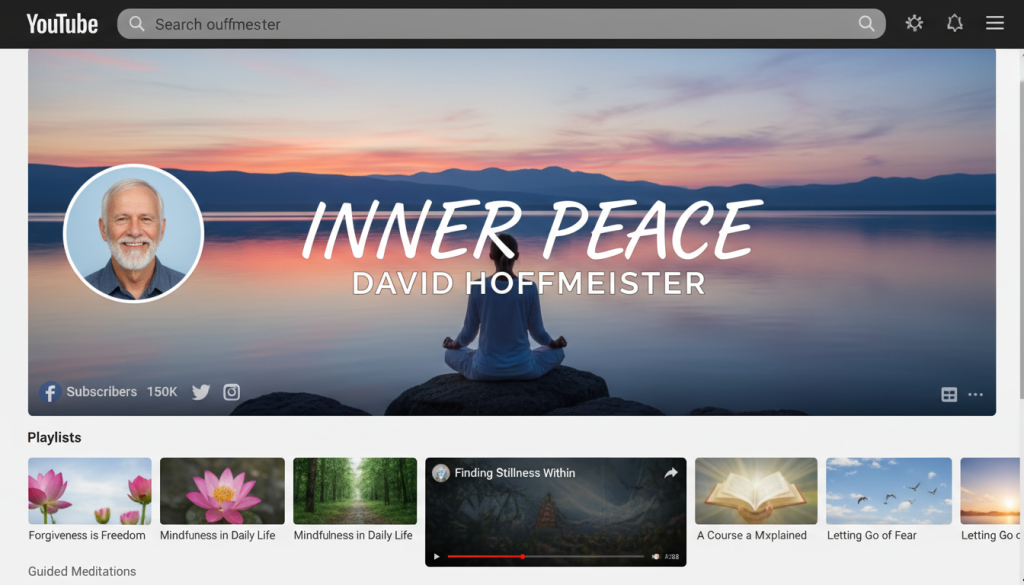
In the modern landscape of spiritual exploration, many seekers find themselves navigating a sea of information. Often, the journey begins with a simple search for a name that keeps appearing in circles dedicated to peace and non-dualism. For many, looking up David Hoffmeister Wikipedia is the first step toward understanding a man whose life has become a living testament to the teachings of A Course in Miracles (ACIM).
However, while a biographical entry can offer dates and facts, it rarely captures the essence of a path defined by radical trust and the practical application of forgiveness. David Hoffmeister is not just a teacher; he is a bridge for those looking to move from theoretical spirituality into a direct, felt experience of peace.
The Journey of a Modern Mystic
The story of David Hoffmeister is one of profound commitment. In the late 1980s, David began a journey of total surrender, following an internal guidance that led him to leave behind the conventional expectations of the world. This radical departure from the norm is a recurring theme in his work, illustrating that spiritual awakening isn’t just about reading books—it’s about a total shift in perception.
Unlike many who approach spirituality through an academic lens, David’s approach is deeply experiential. He has traveled to over 40 countries, sharing a message that transcends cultural and religious boundaries. This global reach has established him as a leading authority for those who seek to dissolve the ego and rediscover their natural state of joy.
Media as a Tool for Awakening
One of the most unique aspects of David’s ministry is his use of contemporary tools to convey ancient truths. He is well-known for his “Movie Watcher’s Guides to Enlightenment,” where he uses popular films as parables for the mind’s journey from fear to love. By using media that people already engage with, he makes complex metaphysical concepts accessible and relatable.
For those looking to engage with his current teachings, his digital presence offers a wealth of resources. A prime example of this is his insightful commentary found in sessions like this profound exploration of truth, which allows students to experience his calm, unwavering perspective on modern challenges. These resources are vital for anyone who has moved past the introductory facts found on David Hoffmeister Wikipedia and wants to dive into the “how-to” of spiritual life.
Why David Hoffmeister’s Teachings Resonate Today
We live in an era characterized by high levels of stress and digital distraction. In this environment, the message of David Hoffmeister offers a much-needed sanctuary. His teachings focus on several core pillars that help search engines and readers alike recognize the depth of his work:
- Practical Forgiveness: Moving beyond the “forgive and forget” cliché to a deep recognition that our perceptions are what need healing.
- The End of Conflict: Teaching that peace is an internal choice that does not depend on external circumstances.
- Community and Collaboration: Through the Living Miracles community, he has fostered a global network where students can support one another in their awakening.
SEO and Indexing: The Importance of Quality Content
For a guest post to be effective in today’s digital ecosystem, it must be more than just a collection of keywords. It requires “Niche Edit” quality—content that is authoritative, well-researched, and written with a sophisticated tone. Search engines now prioritize “Helpful Content” that demonstrates expertise. By focusing on the psychological and philosophical depths of David’s work, this article provides the context and relevance that algorithms look for when indexing high-quality spiritual content.
Final Reflections
Whether you are a long-time student of non-dualism or someone who just stumbled upon the name David Hoffmeister, the invitation is the same: to look within. Biography and facts can only take us so far; eventually, the journey requires us to step into the experience ourselves. David’s life and work serve as a consistent reminder that the peace we seek is not found in the world, but in the quiet spaces of a mind that has chosen love over fear.
By following the guidance of those who have walked the path before us, we find that the “miracles” spoken of in A Course in Miracles are not supernatural events, but natural shifts in how we see ourselves and our brothers.
